Tile Fit Pattern Challenge
Reviews
Description
Fitting Shapes Into a Target Outline
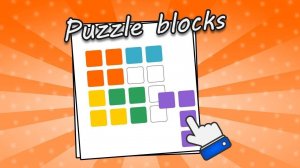
The core task in Tile Fit Pattern Challenge is straightforward: you receive a set of colored shapes and an empty grid. Each shape must be placed so it fits within a predefined outline, without overlapping another piece. The puzzle is solved when every shape is positioned correctly and the outline is completely filled. There is no timer and no score penalty, so the only pressure comes from your own reasoning. [IMG_1]
How Levels Introduce New Constraints
Every level presents a different arrangement of tiles and a unique target shape. Early puzzles use simple configurations that let new players learn how shapes rotate and slot together. Later puzzles add more complex shapes and fixed obstacles that block certain cells, forcing you to plan around them. The difficulty rises gradually, so the game stays approachable for casual players while still giving experienced puzzle fans something to work through.
Controls and Comfort Features
You drag tiles with a mouse or finger and rotate them with a tap or click. The controls are designed to work the same way on desktop, tablet, and mobile. If a puzzle stalls, a hint system can point you toward a solution, and any level can be restarted instantly without losing progress elsewhere. These features keep the focus on thinking rather than fighting the interface. [IMG_2]
Visual Style and Progression
Bright, distinct colors make each tile easy to tell apart, and the interface stays uncluttered so the grid remains the center of attention. Soft background music and subtle sound effects support concentration without becoming distracting. The game includes a large number of levels, each with its own layout and solution, and because there is no time limit, you can replay earlier puzzles to try different placement strategies. The friendly presentation makes it suitable for both children and adults.
Compatibility
Faq
Comments
Sign in to comment
You must be logged in before posting a review or rating.
No comments yet. Be the first to comment!






Editorial Notes