Number Tile Puzzle Challenge
Reviews
Description
What You Actually Do
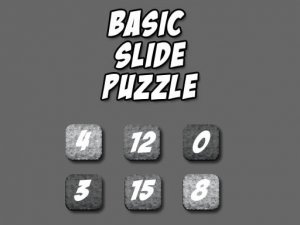
Number Tile Puzzle Challenge places a shuffled grid of numbered squares in front of you. One cell is empty. Your only action is to click or tap a tile adjacent to that empty space, which slides it over and creates a new gap elsewhere. The goal is to keep sliding until every number sits in ascending order. There are no timers, move limits, or penalties, so you can plan each move without pressure.
How the Shuffle Shapes Each Attempt
Every new game begins from a random arrangement, so the sequence of moves you needed last time rarely applies again. That randomness is the main source of replay value: you are not memorizing a fixed solution but reading a fresh configuration and deciding which tile to move next. Because the board changes with every move, a single careless slide can undo progress, which rewards thinking a step or two ahead rather than reacting.
Controls, Feedback, and Pacing
The interface is deliberately uncluttered. Tiles animate smoothly when they slide, giving immediate visual confirmation that your input registered. A timer records how long each puzzle takes, but it does not pressure you; it simply gives you a number to compare across sessions. The game runs in a web browser on desktop and mobile, requires no registration or payment, and can be finished in a few minutes or stretched across a longer sitting depending on your pace.
Approaches That Reduce Wasted Moves
Experienced solvers often lock the top row first, then work downward row by row, because this turns one large arrangement into smaller, manageable sections. The empty space is best treated as a tool for repositioning several tiles at once rather than a single-tile swap. When a layout stalls, stepping away briefly tends to help more than forcing random moves. Regular practice builds pattern recognition, and over time you learn sequences that cut the number of moves needed.
Compatibility
Faq
Comments
Sign in to comment
You must be logged in before posting a review or rating.
No comments yet. Be the first to comment!









Editorial Notes