Duo Cards Classic Card Game
Reviews
Description
Matching Mechanics and Turn Flow
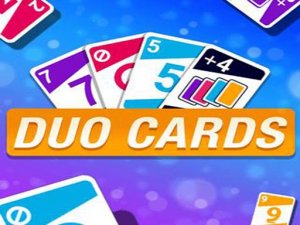
Every round in Duo Cards begins with each player holding seven cards. On your turn, you place a card that matches the top of the discard pile by number, color, or icon. If no card in your hand fits, you draw from the draw pile. The round ends when someone empties their hand. This simple rule set keeps turns fast, but the three-way matching condition means you often have several legal plays, and choosing the right one matters more than it first appears.
Scoring and the 500-Point Race
Points accumulate across rounds, and the first player to reach 500 wins the overall game. Because scoring is tied to discarding cards, each round becomes a small race with its own incentives. You are not just trying to go out first; you are also trying to avoid leaving high-value cards in your hand when an opponent finishes. That tension between speed and card value gives the game a strategic layer beyond simple matching.
Penalties and Blocking Plays
When you are down to one card, you must announce it. Forget, and a penalty card goes into your hand. The game also lets you block opponents by playing cards that force them to draw or skip turns. These two rules turn a straightforward matching game into something more tactical. You can slow a player who is close to going out, and you can protect your own lead by keeping penalty risks in mind.
Browser-Based, Family-Friendly Design
Duo Cards runs directly in a browser with no registration or download. The interface is clean and focused on the cards, and the AI opponents provide a consistent challenge that adapts to your play style. Automatic score tracking removes the need for manual math. Rounds are short enough for a break but can be chained into a longer session. The content is family-friendly, with no violent or inappropriate material, so it suits players of all ages.
Compatibility
Faq
Comments
Sign in to comment
You must be logged in before posting a review or rating.
No comments yet. Be the first to comment!










Editorial Notes