Dora Slide Puzzle for Children
Reviews
Description
What Players Actually Do
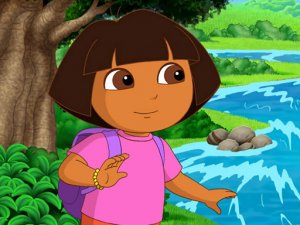
Dora Slide Puzzle for Children is a classic sliding tile puzzle. A picture from Dora's weekend hike is broken into tiles, with one empty space. Players tap or click a tile next to the empty space, and it slides into position. The goal is to keep shifting tiles until the full scene is visible. There is no timer, no score, and no penalty for taking a long time. The game is built for young children, so the interaction is limited to a single, repeated action: select a neighboring tile, watch it move, and reassess the board. That simplicity is the point. A child does not need to learn multiple buttons or menus before starting.
How the Puzzle Teaches Logical Thinking
Sliding puzzles work because every move changes the board. Moving one tile creates a new empty space somewhere else, which opens a different possible move. Children quickly learn that they cannot place a tile wherever they want; they have to plan a sequence. This is a gentle introduction to logical thinking and patience. The game does not rush the player. A child can stare at the board, try a move, undo it mentally, and try another. That trial-and-error process is where the learning happens. Because there are no scores, the only feedback is visual: the picture becomes more complete as tiles fall into place.
Visual Style and Kid-Friendly Design
The artwork comes from Dora the Explorer, so the scene is bright and colorful. The picture itself acts as a guide. As tiles move, children can match colors and shapes to figure out where a piece belongs. The game is described as completely safe, with no violence or inappropriate content. That makes it suitable for family use. The controls are simple enough for little hands: tap or click a tile beside the empty space, and it moves automatically. There is no dragging precision required, which reduces frustration for younger players.
Pacing and Progression
Without timers or scores, the game is structured around relaxation rather than competition. Players work at their own pace and stop whenever they want. The input mentions that the game may include multiple puzzle scenes or difficulty levels, but the core loop stays the same: slide tiles, complete the picture, and move on. There is no pressure to finish quickly, and no penalty for leaving a puzzle unfinished. For parents looking for a calm activity, that design choice matters more than any reward system.
Compatibility
Faq
Comments
Sign in to comment
You must be logged in before posting a review or rating.
No comments yet. Be the first to comment!





Editorial Notes